Sổ Tay Học Phật Home

Category

Cultural Perspectives on Education

17 articles

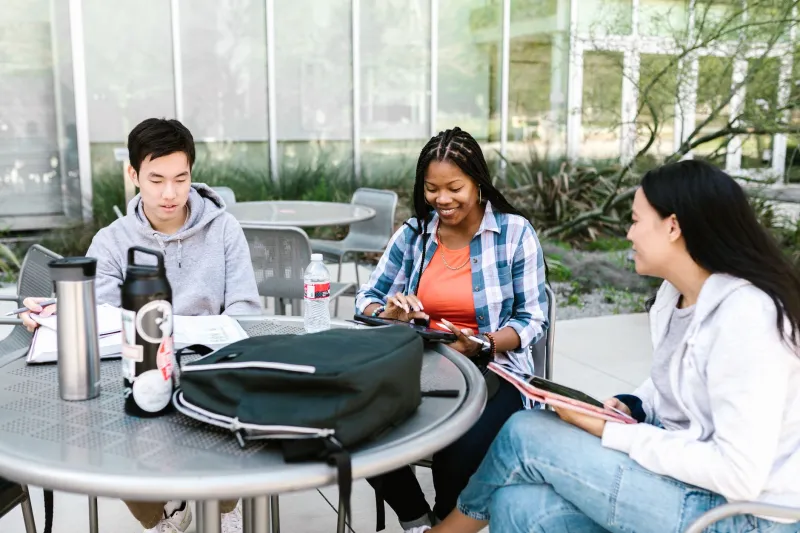
Talk It Out: The Science Behind Why Peer Discussion Outperforms Solo Studying

Talk It Out: The Science Behind Why Peer Discussion Outperforms Solo Studying

Decades of learning science confirm what Vietnamese classroom culture has long practiced: explaining ideas to peers cements knowledge far more effectively than studying alone. Yet most American group study sessions devolve into social hangouts that produce little measurable learning. This article examines why conversation is one of the most underused academic tools available to students—and how to use it deliberately.
Confusion as Compass: What Vietnamese Education Understands About Struggle That American Students Are Never Taught

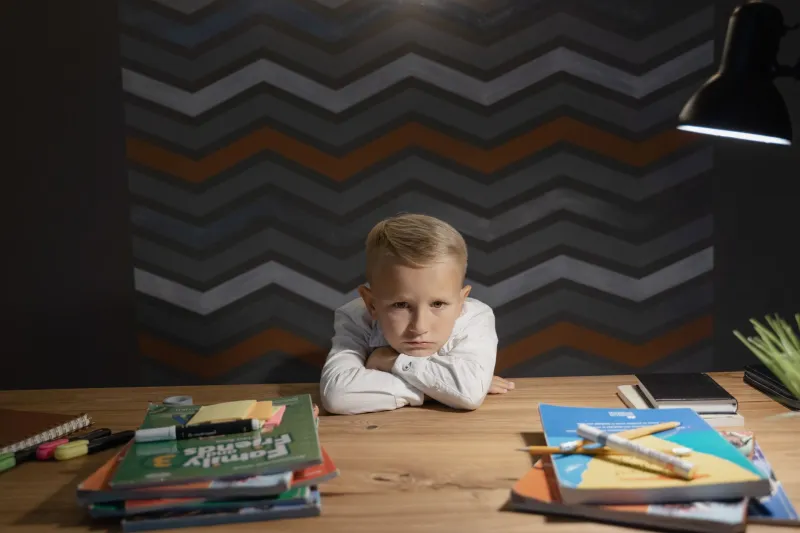
Confusion as Compass: What Vietnamese Education Understands About Struggle That American Students Are Never Taught

American students are often taught — implicitly or explicitly — that confusion signals failure. Vietnamese educational philosophy takes the opposite view, treating difficulty as essential data about where real learning is actually happening. This shift in interpretation, supported by neuroscience, can transform a student's entire relationship with academic challenge.

Prepared to Death: How the Planning Habit Is Preventing American Students From Ever Really Starting

Prepared to Death: How the Planning Habit Is Preventing American Students From Ever Really Starting

Millions of American students spend weeks building elaborate systems before opening a single textbook — and never quite feel ready enough to begin. This piece examines the psychology behind endless preparation, contrasts it with Vietnamese educational cultures that treat imperfect starts as the only real start, and offers a concrete 48-hour framework for escaping the planning loop for good.

Progress, Not Polish: How Vietnamese Students Thrive in the Messy Middle While American Students Wait for the Perfect Moment

Progress, Not Polish: How Vietnamese Students Thrive in the Messy Middle While American Students Wait for the Perfect Moment

Vietnamese educational culture has long celebrated the unfinished, the uncertain, and the in-between as fertile ground for genuine learning. While many American students stall at the starting line waiting for ideal conditions, this piece examines how embracing incompleteness — in notes, comprehension, and effort — can actually accelerate academic growth and quiet the anxiety that perfectionism breeds.

One Size Fits None: Why Clinging to a Learning Style Label May Be Holding You Back

One Size Fits None: Why Clinging to a Learning Style Label May Be Holding You Back

The idea that every student has a fixed learning style — visual, auditory, or kinesthetic — has shaped American classrooms for decades. But Vietnamese educational philosophy takes a sharply different view, one that prioritizes flexibility over identity. Understanding this contrast may fundamentally change how you approach your own studies.

Running Your Own Race: How Vietnamese Learning Culture Escapes the Comparison Spiral That's Holding American Students Back

Running Your Own Race: How Vietnamese Learning Culture Escapes the Comparison Spiral That's Holding American Students Back

American classrooms have quietly cultivated a culture where students measure their worth against their peers rather than their own potential. Vietnamese educational traditions offer a compelling alternative—one rooted in personal mastery, incremental progress, and intrinsic motivation. This article examines the psychological costs of comparison culture and how students can begin shifting toward a healthier internal compass.

What Vietnamese Temple Halls Know About Focus That Your Dorm Room Doesn't

What Vietnamese Temple Halls Know About Focus That Your Dorm Room Doesn't

Traditional Vietnamese learning environments—from monastery halls to humble home altars—are designed with deliberate intentionality, where empty space is understood not as absence but as invitation. Environmental psychology research increasingly validates what these ancient spaces have always practiced: that the physical container of learning shapes the quality of thought itself. American students drowning in dorm-room clutter may find an unexpected teacher in the architectural philosophy of Vie

When the Lesson Stops: How Intentional Silence in Vietnamese Education Unlocks What American Classrooms Keep Missing

When the Lesson Stops: How Intentional Silence in Vietnamese Education Unlocks What American Classrooms Keep Missing

Vietnamese educational culture has long treated unstructured mental space as an essential ingredient in learning—not a gap to be filled, but a tool to be wielded. As American students grow increasingly overstimulated, neuroscience is beginning to validate what Vietnamese classrooms have quietly understood for generations. This article examines why emptiness, used deliberately, may be one of the most powerful forces in a student's intellectual life.

From Instructor to Ally: How the Vietnamese Mentorship Tradition Is Reshaping What American Students Expect from Their Teachers

From Instructor to Ally: How the Vietnamese Mentorship Tradition Is Reshaping What American Students Expect from Their Teachers

In Vietnamese educational culture, the bond between teacher and student is among the most sacred relationships a person can hold—second only to the bond with one's parents. As American schools grapple with disengagement, burnout, and a generation of students who distrust institutional authority, this relational model of teaching is emerging as a surprisingly practical and emotionally resonant alternative.

Study with the Seasons: How Vietnam's Cyclical Learning Philosophy Can Free American Students from the Burnout Trap

Study with the Seasons: How Vietnam's Cyclical Learning Philosophy Can Free American Students from the Burnout Trap

Vietnamese educational philosophy has long drawn wisdom from the natural rhythms of the agricultural calendar, embracing cycles of deep effort and genuine rest as essential to sustainable learning. In sharp contrast to the relentless, always-on pace of American academic culture, this seasonal approach to studying offers a research-backed framework for reducing burnout and building knowledge that actually lasts. American students looking for a smarter way to work might find their answer in an anc

Logging Off to Level Up: How Vietnamese Simplicity Principles Are Helping US Students Reclaim Their Attention

Logging Off to Level Up: How Vietnamese Simplicity Principles Are Helping US Students Reclaim Their Attention

Across American campuses, a quiet movement is gaining momentum—one that draws from Vietnamese educational traditions emphasizing single-tasking, mental clarity, and intentional engagement with learning materials. Students who have adopted digital minimalism practices rooted in these cultural values report sharper focus, reduced anxiety, and measurable academic gains. This article examines the philosophical origins of those practices and offers a practical roadmap for students ready to reclaim th

Stronger Together: Why the Shift Toward Collective Learning Is Changing American Schools for the Better

Stronger Together: Why the Shift Toward Collective Learning Is Changing American Schools for the Better

For generations, American education has been built around individual achievement, personal rankings, and competitive performance metrics. A growing body of research—alongside a quiet philosophical shift inspired by Asian communal learning traditions—suggests that this model may be limiting students in ways that are only now becoming visible. This article examines why schools that embrace collective learning are seeing measurable improvements in both academic outcomes and student well-being.

Character Before Credentials: What Traditional Asian Education Philosophy Teaches Us About Raising Whole Children

Character Before Credentials: What Traditional Asian Education Philosophy Teaches Us About Raising Whole Children

While American schools increasingly measure success through standardized test scores and college acceptance rates, many traditional Asian educational philosophies have long held that moral character and personal integrity are the true foundations of meaningful learning. This article examines what that difference looks like in practice and what American families can genuinely take from it.

Ancient Vietnamese Principles That Modern American Students Can Learn From Right Now

Ancient Vietnamese Principles That Modern American Students Can Learn From Right Now

Long before productivity apps and self-help bestsellers, Vietnamese Buddhist and philosophical traditions offered a coherent framework for how to learn with purpose, endure difficulty, and grow with integrity. Here are five time-tested concepts—drawn from the cultural heritage at the heart of Sổ Tay Học Phật—that speak directly to the challenges facing American students today.